5 Hidden Features of the Zowie S1 You Must Know About
The Zowie S1 has long been a favorite among competitive gamers, streamers, and anyone who prioritizes feel and reliability over flashy software ecosystems. Beyond the obvious strengths—comfortable ergonomics, consistent build, and an esports-focused design—there are a number of lesser-known features and behaviors that materially affect everyday use. This article uncovers five of those hidden features, explains why they matter in real-world scenarios, and offers guidance for buyers who want the best performance and longevity from the S1.
Introduction
Many prospective buyers look at specifications and assume that mice in the same competitive class are interchangeable. In practice, small physical and design details determine how a mouse performs across different play styles and setups. The Zowie S1 is no exception: it’s intentionally minimalist on purpose, but that simplicity hides practical options and characteristics that reward users who take the time to learn them.
This article covers five hidden features of the Zowie S1, how each one affects performance, real-world use cases where they matter, and what to check before buying. It concludes with a short comparison to related Zowie shapes, a pros & cons list, and a buying guide that helps readers match the S1 to their needs.
Hidden Feature 1: Driverless, Onboard Configuration Philosophy
One of Zowie’s signature design decisions is to avoid heavy software ecosystems. Rather than forcing users to install drivers or cloud profiles, the S1 exposes adjustments through hardware controls and default behavior. That means:
- On-the-mouse DPI switching (via an underside or on-board control), so users can change sensitivity instantly without software.
- Consistent behavior across PCs—settings persist without needing a profile manager.
- Lower potential for background processes interfering with input latency.
Real-world use case: a tournament player who uses multiple setups can plug the S1 into any competition machine and retain the same feel without needing to import a profile. For buyers, the driverless design means decreased maintenance and less risk of software-induced input issues, but it also means fewer customization options for macros and fine-grained lighting control.
Hidden Feature 2: Shape and Grip Subtleties That Favor Specific Play Styles
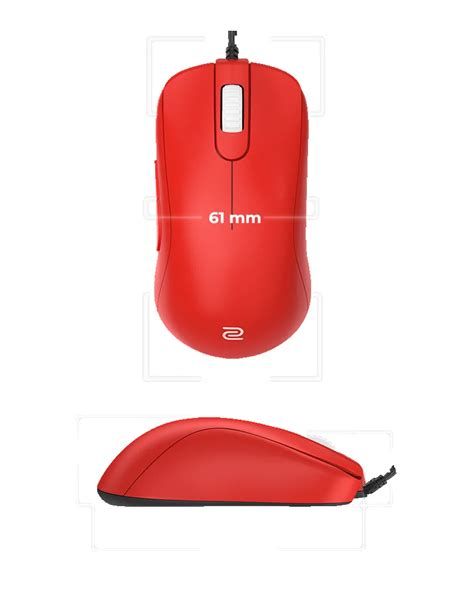
At a glance, the S1’s shell looks straightforward, but subtle curvature, button spacing, and the slope of the palm area influence grip comfort and control. The S1 is tuned for players who prefer:
- Palm and hybrid grips: the palm area supports a relaxed hand posture without forcing excessive finger articulation.
- Consistent thumb placement: the thumb rest and side profile keep the thumb in a repeatable location for quick flicks or controlled swipes.
- Precise fingertip control: the front-to-back taper and button spacing let users adopt claw-like micro-adjustments while retaining palm support.
Real-world use case: FPS players who alternate between close-quarters flicking and longer tracking movements will appreciate the balance the S1 strikes between stability and agility. Buyers who favor pure fingertip-only manipulation or those with very large hands should compare sizes carefully in-store or against known models.
Hidden Feature 3: Stock Feet and Glide Behavior — Tunable Through Environment
The S1 ships with well-tuned PTFE feet that provide a predictable glide on a variety of mousepads. What’s less obvious is how large a role the pad, surface wear, and even desk finish play in perceived mouse responsiveness. The S1’s feet are designed to offer a middle ground: not so slick that the mouse flies away unintentionally, but not so slow that one-handed small moves feel heavy.
Practical points to note:
- The initial break-in of the feet materially changes glide over the first days and weeks of use.
- Using a softer cloth pad vs. a hard polymer pad will shift the mouse’s effective friction and perceived control.
- Replacing or modifying feet (sanding or adding aftermarket skates) is a common and reversible way to fine-tune glide to personal taste.
Real-world use case: streamers who move from desk to desk can expect slight differences in aiming feel between home and studio setups unless they use the same pad type. Buyers who value exact glide characteristics should factor pad choice into their purchase rather than expecting the mouse alone to deliver identical performance across surfaces.
Looking for the best Electronics deals on Amazon?
Shop Amazon →Hidden Feature 4: Button and Scroll-Behavior Nuances
On the surface, the S1 uses mechanical switches for primary and secondary buttons and a notched scroll wheel. Underneath, the behavior of these components can vary with a few practical implications:
- Click actuation and debounce: Zowie tunes the switches for tactile, consistent clicks; gamers who double-click or perform rapid-fire input will find the actuation consistent without aggressive debounce software interfering.
- Scroll precision: the wheel offers distinct detents for reliable weapon switching or menu navigation, but the detent strength and noise may be a factor for content creators who need quiet peripherals.
- Side-button placement: side buttons are positioned to minimize accidental presses while enabling easy access for push-to-talk or weapon binds.
Real-world use case: designers or video editors who use the scroll wheel heavily may appreciate the tactile feedback for timeline scrubbing; competitive players who rely on rapid, repeatable presses will find the physical design very consistent across sessions. Buyers should test button feel and wheel detent strength if possible, because those tactile properties are subjective.
Hidden Feature 5: Longevity and Low-Maintenance Design
Zowie’s build choices favor durability and minimal upkeep. The S1’s simple internal layout and relatively few moving or software-dependent parts mean maintenance is straightforward:
- Cleaning is often limited to surface wipes and occasional dusting around the scroll wheel and sensor window.
- There are no required firmware updates to maintain basic functionality—this reduces the risk of post-update regressions.
- Third-party repair shops and hobbyists can service common wear items (switches and feet) without proprietary seals or invasive manufacturing glue in many cases.
Real-world use case: household environments with pets or kids benefit from a mouse that can be reliably cleaned and continues to behave consistently after years of use. Buyers who prioritize a “buy once, use for years” mentality should weigh the S1’s reputation for longevity against smaller, cheaper mice.
Detailed Product Analysis
Putting the hidden features into context, the S1’s design philosophy consistently privileges feel, predictability, and competitive performance over customization or flashy lighting. Key aspects to evaluate when considering the S1 include:
Ergonomics and Fit
The S1 fits a wide range of hand sizes for palm and hybrid grips. Its slope and button reach are designed to minimize wrist strain during extended sessions. For users with very large hands or who prefer fingertip-only control, sizing comparisons are important; finger length and palm width determine whether the S1 feels ‘just right’ or slightly cramped.
Sensor and Tracking
The S1 uses a precision optical sensor tuned for accurate tracking, low acceleration, and consistent responsiveness. In practical terms this delivers reliable cursor movement for both low-sensitivity large-swipe play and higher-DPI small-movement setups. Users who require ultra-high DPI for specific software should verify DPI ranges, but most competitive players use settings in a range where the S1 performs very well.
Cable and Connectivity
Zowie opts for a simple, flexible cable that aims to minimize drag while maintaining durability. The cable’s flexibility affects how “anchored” the mouse feels when making long swipes. Many players pair the S1 with a mouse bungee or a cable management clip to further reduce perceived drag.
Noise and Tactility
The S1’s switches and wheel provide audible and tactile feedback that many gamers prefer because it translates directly into confidence in each input. For content creators working in noise-sensitive environments, the wheel and clicks are not silent, so that should be considered.
Pros & Cons
- Pros:
- Simple, driverless setup with consistent behavior across PCs
- Ergonomic shape that supports palm and hybrid grips well
- Reliable build quality with user-serviceable aspects
- Predictable glide and sensor behavior suited for competitive gaming
- Minimal software dependency reduces background resource use and latency risk
- Cons:
- Limited onboard customization compared with mice that provide software macros and RGB
- May not be ideal for very large hands or exclusive fingertip-grip players without trying first
- Not the quietest mouse—clicks and wheel detents are audible
- Customization (e.g., changing feet or switches) requires aftermarket parts or manual work
How the S1 Compares to Other Zowie Shapes
| Model | Primary Shape | Best Grip Style | Ease of Portability | Customization Level |
|---|---|---|---|---|
| Zowie S1 | Ergonomic (right-handed) | Palm / Hybrid | High — plug-and-play, no software | Low (hardware presets) |
| Zowie EC Series | Ergonomic (larger, right-handed) | Palm / Claw | Moderate — larger footprint | Low (hardware presets) |
| Zowie FK / ZA Series | Ambidextrous | Claw / Fingertip | High — compact and portable | Low (hardware presets) |
Buying Guide: What to Consider Before Choosing the Zowie S1
When evaluating whether the Zowie S1 is the right mouse, buyers should prioritize a few practical checks and questions that tie back to the mouse’s hidden strengths.
Find top-rated Electronics products at great prices.
Browse Now →1. Grip and Hand Size
Measure hand length (from wrist crease to the tip of the middle finger) and compare it to in-store testers or published size guides. The S1’s shell favors palm and hybrid grips—if a buyer prefers fingertip-only usage, testing is essential.
2. Use Case: Competitive Play vs. Office Work
For competitive gaming, the S1’s driverless reliability and consistent tracking are major assets. For office-heavy usage where silence or macro customization is essential, a mouse with quieter switches or customizable macros may be a better fit.
3. Surface and Glide Preferences
Decide whether the setup will use a hard pad (for speed) or soft pad (for control). The S1 performs well on both, but the final feel depends on pad choice. Buyers who want a very specific glide should budget for aftermarket feet or experiment with pad types.
4. Portability and Multiple Setups
Because it doesn’t rely on software, the S1 is particularly strong for users who work or compete across multiple PCs. Consider whether the mouse will live on one desktop or travel—portability favors smaller mice, but the S1 balances size and comfort effectively.
5. Longevity and Maintenance
Look for signs of solid assembly and easy cleaning (removable dust around the wheel, non-porous finishes). Consider whether replacement feet or switches are readily available if long-term maintenance is a priority.
6. Try Before You Buy When Possible
Because shape and tactile feel are subjective, testing the S1 in person (if feasible) is the most reliable way to avoid post-purchase disappointment. If that’s not possible, compare hand dimensions to the sizes of other proven models and read multiple user impressions from people with similar grips and play styles.
Conclusion
The Zowie S1’s understated approach is exactly what makes it appealing to many buyers: predictable performance, minimal fuss, and durability. Its hidden strengths—hardware-focused configuration, subtle ergonomic tuning, tunable glide through pad and feet choices, tactile input behavior, and ease of maintenance—reward users who value consistency and feel over headline features like RGB or deep software macros.
For competitive players, streamers who travel, and anyone who wants a mouse that "just works" across different PCs, the S1 is a particularly strong candidate. Prospective buyers should match their grip style and surface choices to the mouse and consider testing it side-by-side with similarly purposed models. With the right setup, the S1 becomes more than the sum of its spec sheet: it becomes a reliable extension of the user’s hand and intent.